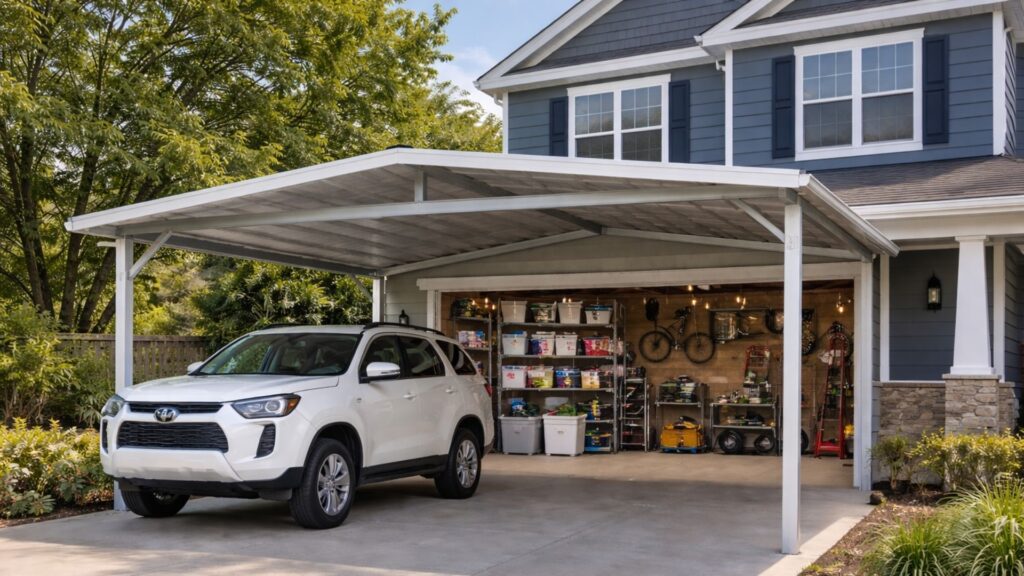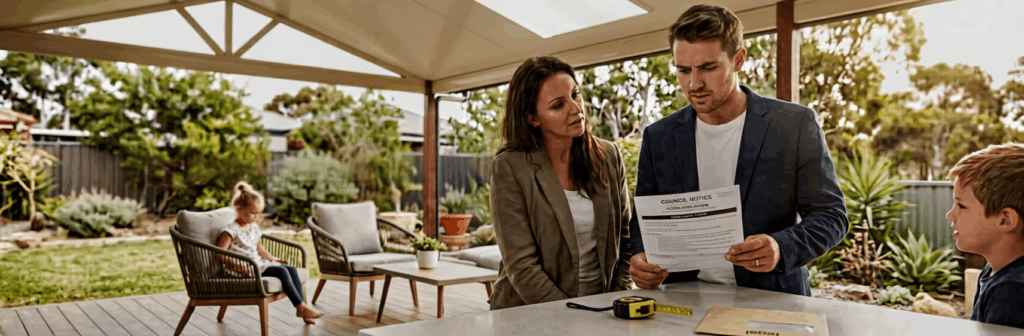
If you live in Redlands or Moreton Bay, you already know the coast shapes everything. It also shapes your building rules. Patios and carports here face stronger winds, more corrosion and tighter approval requirements than inland councils. Both Redland City Council and Moreton Bay Regional Council treat these structures as structural works, which means most meaningful builds need formal approval.
If your patio or carport is over 10 m², taller than 2.4 metres, or has any side longer than 5 metres, you need building approval. Add coastal overlays, storm tide exposure, and higher wind categories, and approval becomes less a technicality and more a safety requirement.
This guide gives you the rules, the real triggers, and the coastal considerations homeowners often miss.
Patios and Carports in Redlands and Moreton Bay
Both councils use the Queensland Development Code for size and height triggers. If the structure is roofed and exceeds any of the following, approval is required:
- More than 10 m²
- Any point above 2.4 metres
- Any side longer than 5 metres
- Any mean height over 2.1 metres
- Any structure connected to the house
- Any structure within a coastal, flood, erosion, storm tide or bushfire overlay
Patios and carports follow the same rules. The difference is not the structure type but where it is built and how exposed the site is to wind and salt.
Boundary concessions for open carports
You can use the state open carport concession only if:
- two or more sides remain fully open
- at least one third of the perimeter is open
- roof edges on open sides are at least 500 mm from any boundary or structure
Coastal, flood and storm tide overlays can override this concession entirely.
Coastal Requirements by Suburb
Where you live determines the engineering you need. Redlands and Moreton Bay range from sheltered inland pockets to some of Queensland’s highest corrosion zones.
High exposure coastal suburbs
Wind ratings N3 to N4 and corrosion categories C3 to C5. These areas need marine-grade fixings and stronger structural design.
Redlands
Cleveland, Thornlands, Victoria Point, Wellington Point, Ormiston, Birkdale
Moreton Bay
Scarborough, Redcliffe, Woody Point, Clontarf, Deception Bay, Bribie Island, Sandstone Point, Bellara
Near coastal suburbs
Still affected by coastal winds and salt, but with slightly lower exposure categories.
Redlands
Capalaba, Alexandra Hills, Sheldon
Moreton Bay
Griffin, Mango Hill, North Lakes, Narangba, Burpengary
Island communities
Among the highest corrosion zones in Queensland. Many builds require Category C5 corrosion protection and stainless steel 316 fittings.
Redlands
Macleay Island, Russell Island, Karragarra, Lamb Island
Moreton Bay
Bribie Island foreshore pockets
Rural and acreage suburbs
Larger setbacks and varied wind exposure.
Redlands
Mount Cotton, Redland Bay inland pockets
Moreton Bay
Dayboro, Mount Mee, Mount Nebo, Wamuran
Standard suburban areas
Still require approval once size thresholds are met.
Redlands
Redland Bay, inland pockets away from the bay
Moreton Bay
Caboolture, Morayfield, Strathpine
Your distance from the water influences wind category, corrosion level and the exact engineering your structure needs.
When Approval Is Required in Redlands and Moreton Bay
Expect approval for:
- Patios or pergolas over 10 m²
- Carports exceeding 2.4 metres in height
- Any structure with a side longer than 5 metres
- Structures within coastal, erosion, storm tide, flood or bushfire hazard areas
- Any structure attached to the dwelling
- Footings, posts, beams and all structural framing
- Roofed structures of any size in coastal overlays
If it has a roof and posts, assume it needs approval.
The Approval Process
1. Site review
Your wind category, corrosion level and hazard overlays determine the design. Coastal suburbs often require N3 or N4 engineering.
2. Engineering for coastal conditions
Marine air corrodes standard fasteners. Fabrication and installation must meet Australian Standards. Certifiers expect corrosion category compliance.
3. Certification through a private certifier
Most approvals go through private certifiers. Council becomes involved only when relaxations or high-risk overlays apply.
4. Inspections and final sign-off
Footings, framing and final certificates confirm compliance. Missing certificates delay insurance claims and property sales.
Approval now prevents headaches later.
The Real Cost of Skipping Approval
Homeowners in Redlands and Moreton Bay often underestimate coastal risk. Councils do not. Unapproved structures are flagged during insurance claims, property sales and neighbour disputes.
Fines and enforcement
Councils issue show cause notices, stop work orders and fines. In hazard areas, penalties can reach legal maximums.
Insurance refusal
Storm damage on an unapproved structure will often be excluded. Insurers can deny related home claims as well.
Problems when selling
Conveyancers check approval history. Buyers withdraw or demand reductions. Retrospective approval is slow, costly and often requires re-engineering coastal connections.
Rebuilds and redesigns
If a structure fails wind or corrosion standards, the fix may involve new posts, upgraded fixings, or full rebuilds.
Ongoing liability
Any renovation or claim can expose the issue. Approval removes the future risk.
Redlands and Moreton Bay FAQ
Do patios and carports need approval in Redlands and Moreton Bay?
Yes. If the structure is over 10 m², taller than 2.4 metres, longer than 5 metres on any side, or roofed, it requires building approval. Coastal suburbs also trigger higher engineering standards.
Are coastal suburbs treated differently?
Yes. Bayside suburbs such as Cleveland, Victoria Point, Wellington Point, Ormiston, Birkdale, Redcliffe, Scarborough and Deception Bay face strong winds and salt exposure. Builds in these areas require marine-grade materials, higher wind ratings and stricter engineering.
What wind categories apply?
Most coastal areas sit in N3. Exposed parts of Moreton Bay, including Redcliffe peninsula and Bribie Island, push into N4. Inland suburbs may range from N2 to N3 depending on site elevation and shielding.
Do island communities need special materials?
Yes. Macleay Island, Russell Island, Karragarra, Lamb Island and exposed Bribie Island locations require corrosion category C4 to C5. Many builds need 316 stainless steel fixings to meet long term durability standards.
How do storm tide and erosion overlays affect approval?
In Moreton Bay, storm tide inundation, erosion prone and flood hazard overlays trigger mandatory development assessment for many outbuildings. Redlands uses coastal hazard mapping that can also require additional engineering and setback controls.
Do newer estates like North Lakes or Mango Hill have extra rules?
Yes. Most master planned estates have covenants that sit on top of council rules. These may dictate roof type, colour, material, height or placement.
Can I use a private certifier?
Yes. Almost all patio and carport approvals in these councils go through private certifiers unless you need a relaxation or fall into a higher risk overlay.
What happens if I build without approval?
You risk fines, insurance denials, costly retrospective engineering and possible rebuild orders. Coastal structures that do not meet code carry higher safety risks during storms.
Build Confidently in Coastal Conditions
At Lifestyle Patios, we design and build for the coast. We manage engineering, approvals and certification for Redlands and Moreton Bay so your structure is safe, compliant and built to handle the local environment. Coastal wind exposure, corrosion levels and bay-facing weather patterns all shape how a patio or carport must be designed.
We work across bayside and inland suburbs including Cleveland, Thornlands, Victoria Point, Wellington Point, Ormiston, Birkdale, Scarborough, Redcliffe, Deception Bay, Bribie Island, Sandstone Point, Capalaba, Alexandra Hills, Mango Hill, North Lakes, Narangba and Burpengary. Every design is shaped around your site, your wind category and your long term durability needs.
When you want a patio or carport that performs for years, we guide your project from planning to certification with confidence.
See some of our Redlands & Moreton Bay patio and carport projects here: https://www.lifestylepatios.com/locations/redlands-and-moreton-bay/
Disclaimer
The details in this blog are accurate at the time of publishing based on publicly available Redland City Council and Moreton Bay Regional Council information and Queensland building legislation. Local rules, overlays and standards may change.